
Pet GPS trackers have become increasingly popular, but not all of them actually do what they promise. When your pet goes missing, flashy features and marketing buzzwords won’t help you need reliable coverage, real time alerts, accurate location data, and battery life that lasts when it matters most.
Many pets don’t disappear in remote forests or open fields. Most go missing close to home within neighbourhoods, near familiar streets, or just beyond a gate left open. A truly effective GPS tracker helps you find your pet quickly, not just show where they were hours ago.
This guide breaks down what separates GPS trackers that genuinely work from those that only look good on product pages.
1. What Makes a GPS Tracker Truly Reliable (Beyond the Word “GPS”)
Most pet trackers advertise “GPS,” but few explain how their tracking system actually functions. In reality, accurate tracking relies on a combination of technologies.
The three main positioning systems include:
-
GPS (Global Positioning System): Offers the most accurate outdoor tracking using satellite signals
-
Wi-Fi Assisted Location: Uses nearby Wi-Fi networks to improve accuracy in urban environments
-
Cellular / LTE Networks: Transmits location data over mobile networks, offering wider range than Bluetooth
Why this matters
Trackers that rely only on Bluetooth or short-range signals become useless once your pet is out of sight. The most reliable devices use a hybrid system, switching intelligently between GPS, Wi-Fi, and cellular networks.
This layered approach ensures accurate tracking whether your pet is in a backyard, city street, or open park—minimising blind spots when you need location data the most.
Pro tip: Look for trackers that default to GPS outdoors, enhance accuracy with Wi-Fi in dense areas, and fall back on cellular networks when needed.
2. Battery Life: The Hidden KPI Most Owners Overlook

Battery life is often underestimated—until it’s too late. In real missing-pet scenarios, battery longevity can matter more than feature count.
Key battery factors to consider:
-
Reporting Interval: Location updates every minute drain batteries far faster than 15–30 minute intervals
-
Power-Saving Modes: Smart trackers reduce GPS usage when pets are resting
-
Motion-Based Activation: Built-in sensors wake tracking only when movement is detected
Real-world example
If your dog runs around for 30 minutes and then naps for hours, a tracker with motion-based optimisation can last days instead of hours.
Pro tip: For active pets, prioritise trackers with adjustable reporting intervals and intelligent motion detection.
3. Geofencing and Safe Zones That Help You Act (Not Just Alert)

Geofencing isn’t just about drawing a digital fence—it’s about meaningful, actionable boundaries.
Effective trackers allow you to create multiple custom zones, such as:
-
Home perimeter
-
Dog parks or daycare locations
-
High-risk areas near roads, water, or construction
Advanced systems go further by offering context-aware alerts, including:
-
Notifications if your pet leaves home earlier than usual
-
Alerts if your pet stays outside a zone too long
-
Warnings when boundaries are crossed after specific hours
These alerts don’t just notify you—they help you intervene early, before a minor escape turns into an emergency
4. Real-Time Tracking vs. Location History
Some trackers only show where your pet was—not where they are.
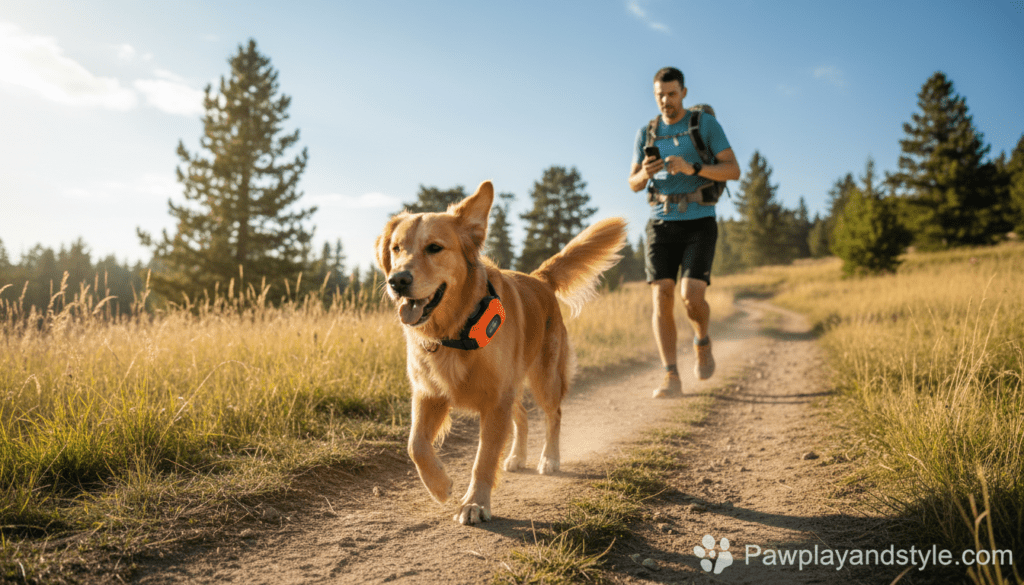
Real-time tracking allows you to:
-
Monitor live movement
-
Follow a breadcrumb trail if your pet is running
-
Share live coordinates instantly with family or volunteers
Location history is still useful for understanding habits, but it should never replace real-time tracking. The best devices offer both, giving you immediate visibility and long-term insights.
5. Collar Fit, Comfort, and Wearability

A GPS tracker is useless if your pet refuses to wear it.
Important comfort considerations include:
Low centre of gravity: Dangling trackers can irritate pets and fall off
Proper balance: Heavier units require wider, padded collars to prevent neck strain
Waterproofing: Look for IP67 or IP68 ratings—not just “splash-resistant” claims
Pro tip: For pets with thick fur, choose slim, flat trackers that sit discreetly under the coat—out of sight and less tempting to chew.
6. Using Tracking Data Proactively (Not Just Reactively)
Smart tracking isn’t only about emergencies—it’s about prevention.
Pet owners use tracking data to:
Identify roaming patterns and escape routes
Adjust walk schedules and playtime based on movement habits
Improve yard security by spotting frequent boundary approaches
Share live tracking links during emergencies to coordinate search efforts
Over time, this data helps you understand your pet’s behaviour—and reduce the chances of them going missing again.
7. What Most GPS Tracker Reviews Never Tell You
Before buying, consider these often-overlooked realities:
Cellular subscription plans matter: Cheap devices may require monthly fees with limited coverage
Coverage gaps exist: Even large cities have dead zones—always check network maps
International limitations: Some trackers don’t work across borders
History restrictions: Certain devices store only limited location history unless upgraded
Knowing these details upfront prevents disappointment later.
Conclusion
A smart GPS tracker should do more than display a location dot on a screen. It should give you confidence, clarity, and time—when every minute matters.
By focusing on reliable positioning technology, intelligent battery management, actionable geofencing, real-time tracking, and comfort-focused design, you can choose a tracker that genuinely protects your pet rather than just looking impressive online.
When chosen wisely, a GPS tracker becomes more than a gadget—it becomes peace of mind.