
Pet cameras are no longer just simple webcams that let you check in on your pet while you’re away. The best modern pet cameras function as behaviour management tools, emotional support systems, and real problem solvers.
When chosen correctly, they help reduce anxiety, reinforce good habits, monitor health patterns, and even prevent destructive behaviour. This article goes beyond surface-level features to explain how smart pet cameras actually work in real life—details you won’t usually find in basic product roundups.
1. Two-Way Audio That Actually Calms Pets (Not Just Lets You Talk)
Two-way audio may sound like a basic feature, but when used correctly, it can significantly reduce anxiety-related behaviours.
Why it works
Pets strongly associate their owner’s voice with comfort and safety
A calm, familiar tone can redirect anxiety more effectively than physical presence
Repeated use of consistent phrases helps build a conditioned calming response
Simple phrases like “It’s okay” or “Go lie down” become powerful cues over time.
Pro tip:
Some advanced pet cameras allow pre-recorded voice messages that automatically play when motion is detected. This is especially helpful when you can’t open the app immediately.
2. Treat Dispensers That Reinforce Behaviour (Not Just Bribery)
Treat dispensing is often misunderstood as simple bribery. In reality, it’s a powerful behaviour-shaping tool when used intentionally.
Smart ways owners use treat dispensers:
Dispense treats only when the pet is calm—not during frantic pacing
Schedule treats during predictable low-stress periods
Reinforce post-meal or post-nap routines
Some cameras allow app-based scheduling, which is particularly useful for pets with separation anxiety or training needs.
When used correctly, treats become reinforcement—not distraction.
3. Motion Alerts You Can Tailor (Instead of Constant Noise)
Basic pet cameras notify you every time something moves. Smart cameras, however, provide context-aware alerts.
Advanced motion categorisation includes:
Pet vs human detection
Movement vs lingering behaviour
Time-sensitive alerts (daytime vs nighttime activity)
Examples of truly useful alerts:
“Your dog has been pacing for 3 minutes”
“Pet left resting area after midnight”
“Repeated door sniffing detected”
These alerts help you understand patterns, not just activity.
4. Night Vision That Shows Meaningful Detail
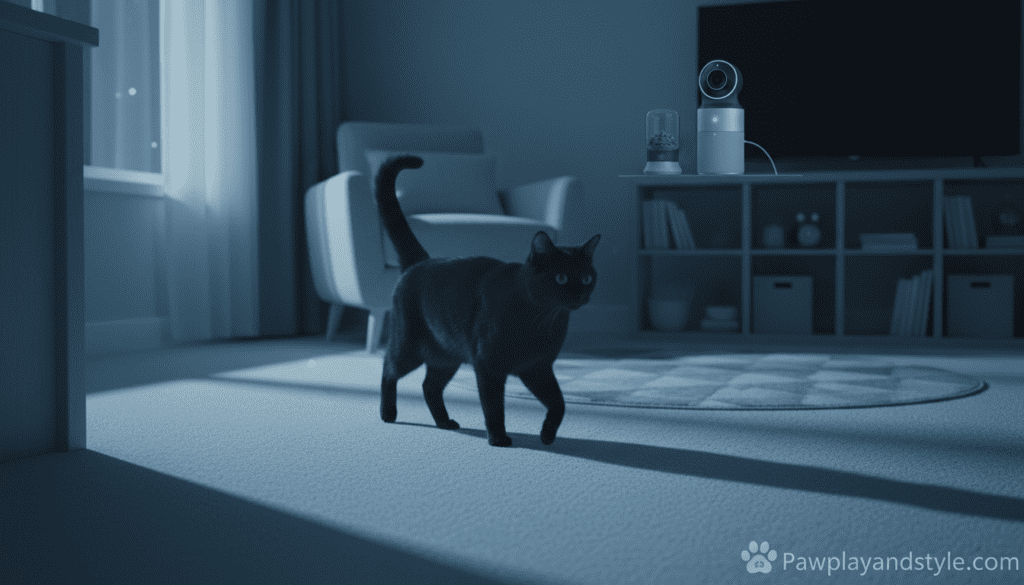
Almost every camera claims to have night vision—but quality matters.
What actually makes night vision useful:
True infrared (IR): No visible light that could disturb pets
High-resolution imaging: Allows you to observe posture, pacing, and discomfort
Adjustable sensitivity: Reduces false alerts from shadows or reflections
High-quality night footage helps you identify anxiety behaviours rather than vague movement blobs.
5. Environmental Triggers and Smart Routines
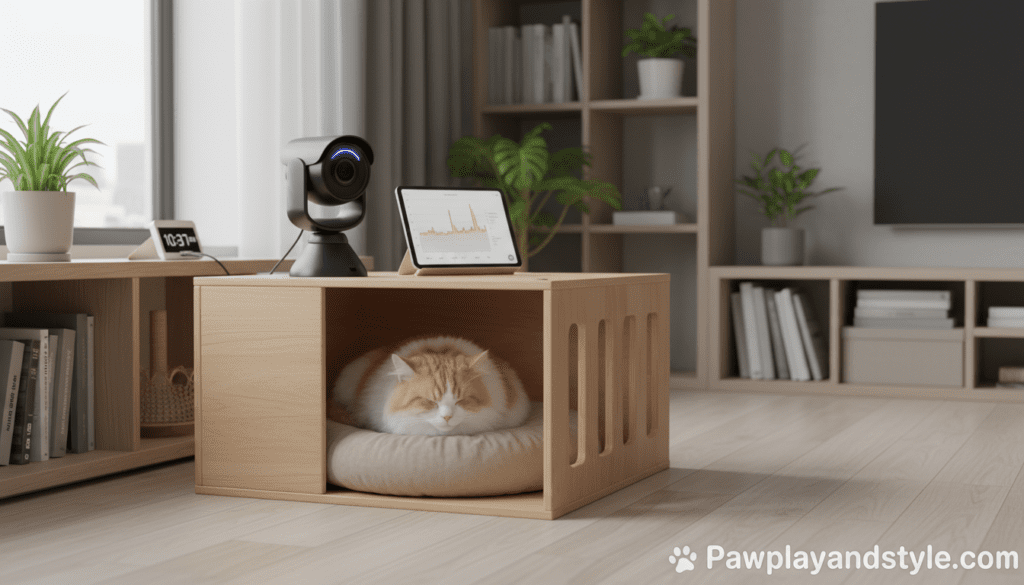
The most advanced pet cameras integrate with environmental sensors and smart home systems.
Examples of useful integrations:
Start recording when barking, whining, or loud noises occur
Trigger alerts when room temperature rises or drops
Activate “rest mode” after mealtime to focus on abnormal movement
These features transform a camera into a smart monitoring system, not just a passive observer.
6. Behaviour Analytics That Reveal Hidden Patterns

Top-tier pet cameras don’t just show live video—they analyse behaviour over time.
Common insights include:
Total time spent restless
Movement patterns throughout the day
Sleep and wake cycles
Frequency of whining or visits to specific zones
This data is invaluable for:
Managing separation anxiety
Sharing behavioural insights with vets
Adjusting routines and schedules
Instead of guessing, you make informed decisions based on real data.
7. Privacy and Security You Should Never Ignore
Because pet cameras connect to the internet, security is non-negotiable.
Essential security features include:
Encrypted video streams
Two-factor authentication
User-specific access controls
Best practice:
Always change default passwords and use a unique password for your camera app to protect your home network.
8. What Most Pet Camera Reviews Never Mention
Here are critical details often ignored in reviews:
Latency: A 5-second delay can make live interaction feel useless
Low-bandwidth modes: Some cameras reduce video quality to save data
Smart object recognition: Prevents false alerts from shadows or household movement
These factors determine whether a camera becomes a daily tool—or gets ignored after a week.
Conclusion
A great pet camera does far more than stream video. It helps you understand behaviour, reduce anxiety, reinforce routines, and respond intelligently to problems even when you’re not home.
When you choose a camera based on behaviour tools, smart alerts, analytics, and security, you’re not just buying a gadget you’re investing in your pet’s emotional wellbeing and your own peace of mind.